
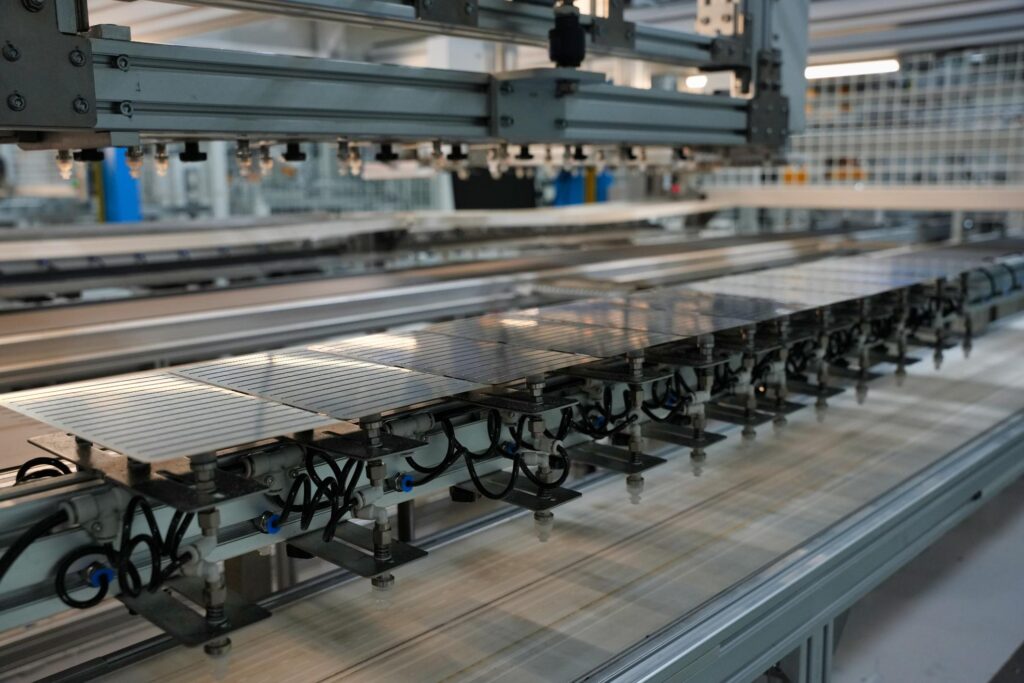
Solar energy has emerged as one of the fastest-growing renewable energy sources globally. At the heart of every solar panel lies a precisely engineered solar cell. Understanding how solar cells are manufactured provides insight into the technology driving the clean energy revolution.
The manufacturing process begins with silica (sand), which is refined into high-purity silicon. Through chemical processing and melting, silicon is purified to solar-grade quality.
Purified silicon is melted and formed into cylindrical or rectangular ingots. These ingots are sliced into ultra-thin wafers using precision wire saws. Each wafer serves as the foundation for a solar cell.
To create electrical properties, wafers are treated with phosphorus or boron in a high-temperature diffusion furnace. This creates a P-N junction, the core mechanism that enables electricity generation.
A thin anti-reflective coating (ARC) is applied to reduce light loss and maximize sunlight absorption.
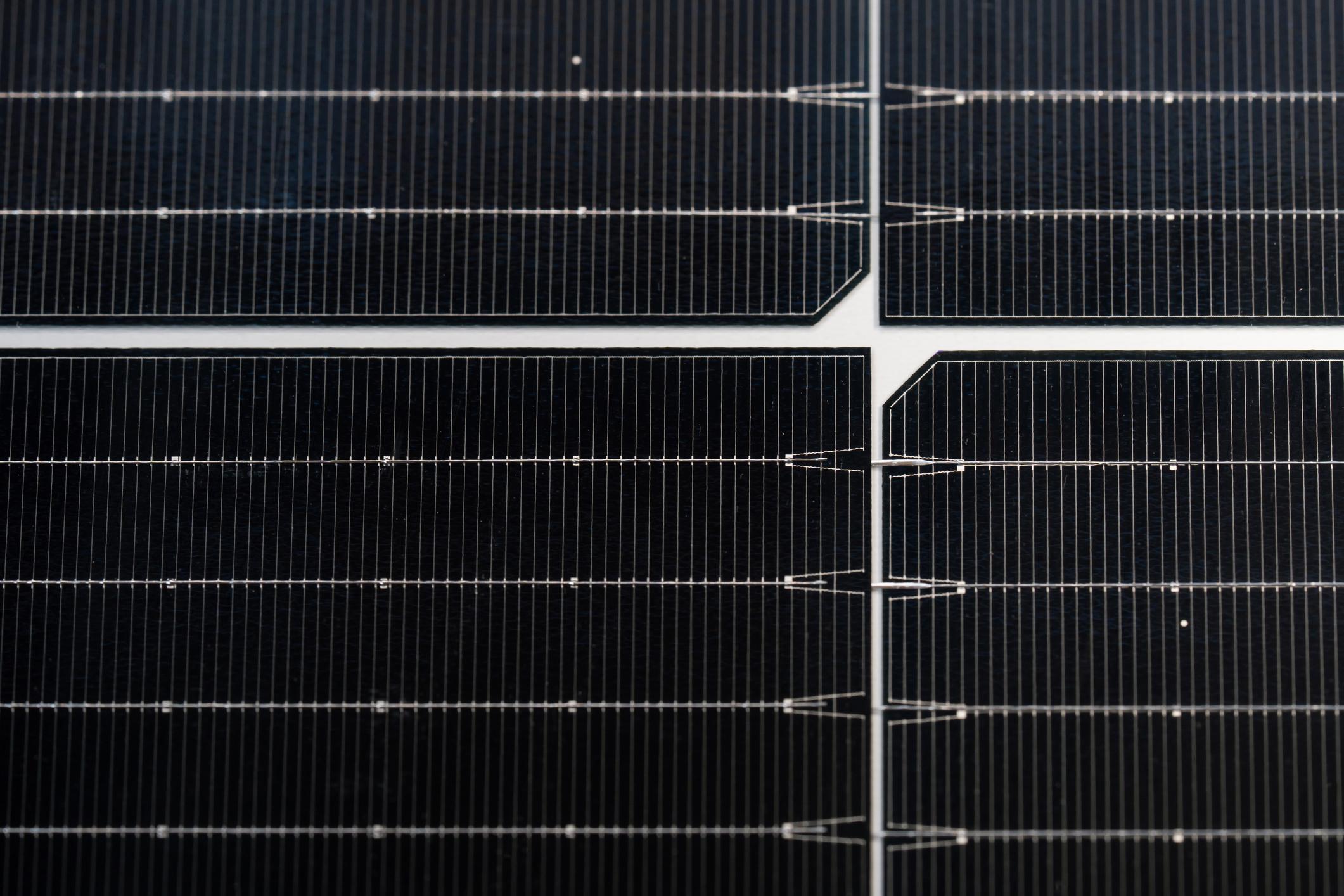
Fine silver grid lines are printed on the wafer surface to collect and transport electricity. Aluminum is typically applied to the back side.
Each solar cell is tested for efficiency, power output, and quality compliance before being assembled into solar panels.
From raw silicon to high-performance photovoltaic cells, solar cell manufacturing is a highly controlled and technology-driven process that ensures long-term durability, efficiency, and sustainability.